
Transform Your Sales Pipeline: Why Marketing Isn’t Enough

by | Marketing

Marketing the Doesn’t Close Deals—Here’s What Does

If your sales are slow and you’re pointing the finger at marketing, it’s time to shift your perspective. Many business owners fall into the trap of blaming marketing when the real issue lies elsewhere. Marketing’s job is to get you found—it’s the engine that drives leads to your door. But closing deals? That’s on you and your team. Understanding this distinction is crucial to growing your business effectively.

Marketing alone doesn’t close deals. It sets the stage by generating interest and bringing prospects in. What happens after that—the follow-up, the conversations, the trust-building—that’s where your sales efforts come in. If you’re measuring marketing success by closed sales alone, you’re looking at the wrong metric. Instead, focus on how marketing fuels the top of your sales funnel and how your team drives the bottom.

Understanding the Sales Pipeline and Its Role in Closing Deals

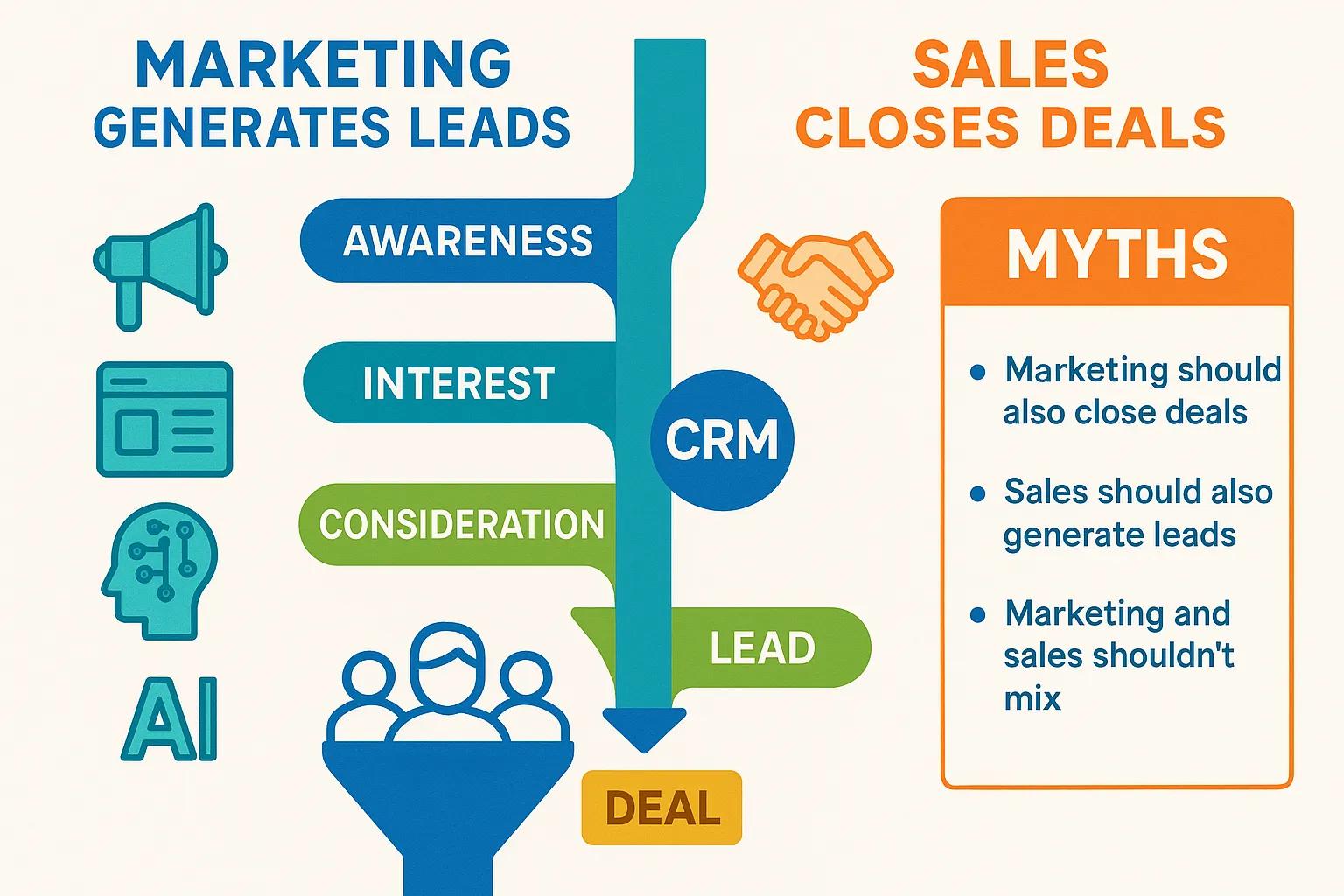
Let’s break down the sales pipeline so you can see exactly where marketing fits—and where your team takes over. The sales pipeline is the journey your potential customer travels from first hearing about you to signing on the dotted line. It includes several key stages:

  1. Lead generation is part of marketing's domain. Your marketing efforts—whether it's local SEO, voice search optimization, or geo-fenced campaigns—are designed to get your business found. This is where your phone rings, your inbox fills, and people walk through your door.
  2. Lead Engagement: Once a lead is generated, your team's follow-up speed and consistency become critical. This is where many businesses lose momentum. If you don't respond quickly and reliably, those leads cool off fast.
  3. Building Trust and Conversation: Your sales team's ability to connect, listen actively, and build rapport is what turns interest into intent. This human element can't be automated—it's the heart of closing deals.
  4. Closing the Sale: Finally, your team's efforts to address concerns, negotiate, and seal the deal convert prospects into customers.

Marketing fuels the top of the funnel—it helps you get found and brings in leads. But the bottom of the funnel—follow-up, conversation, and closing—is where your team’s skills and effort make all the difference. If you’re blaming marketing for low sales, you’re likely confusing lead volume with revenue. More leads don’t automatically mean more sales if your follow-up and closing processes aren’t dialed in.

Effectively, the lead qualification is also key. Not all leads are created equal, and your team needs to focus on the prospects most likely to convert. This prioritization ensures your efforts yield the best return.

Further research highlights how robust CRM systems are instrumental in optimizing the entire sales pipeline, from initial lead generation to final conversion.

CRM for Sales Pipeline Optimization

This paper presents a comprehensive review of CRM-enabled sales pipeline optimization throughout the sales pipeline. These capabilities position CRM as a strategic cornerstone in

Optimizing CRM-based sales pipelines: A business process reengineering model, CC Imediegwu, 2020

AI-Power the Marketing Automation for Lead Conversion

AI-powered marketing automation is a game-changer for the top of your funnel. By leveraging advanced algorithms and data analytics, AI tools streamline your marketing efforts, personalize customer interactions, and improve lead quality. This means your marketing isn’t just casting a wide net—it’s targeting the right prospects with the right message at the right time.

For example, AI marketing automation can analyze customer behavior and preferences to tailor your messaging and offers. This personalized approach increases engagement and builds trust before your team even picks up the phone. It also automates routine tasks, freeing your marketing team to focus on strategy and creativity.

Studies confirm that AI significantly boosts marketing effectiveness through better audience segmentation and personalized offers, leading to higher conversion rates and improved ROI.

AI for Marketing: Personalization, Conversion & Efficiency

It was found that AI allows for better audience segmentation and increased personalisation of offers, which leads to higher conversion rates and return on investment. Automation of routine processes, such as administrative tasks and customer support, helps to reduce the time spent on these operations and increases overall business efficiency. In addition, companies that have implemented AI chatbots and virtual assistants have reduced response times to customer queries, which has

AUTOMATION IN DIGITAL MARKETING: HOW AI TECHNOLOGIES HAVE CHANGED MARKETING STRATEGIES, YD Gorodetskiy, 2025

Launched is a company focused on leveraging AI-powered marketing and automation to enhance the sales pipeline and improve lead conversion rates. By utilizing these innovative solutions, your business can optimize marketing strategies and achieve better results.

How does the AI improve lead conversion?

AI improves lead conversion by analyzing vast amounts of data to identify patterns and trends that human marketers might overlook. This capability allows you to create highly targeted campaigns that resonate with specific audience segments. Additionally, AI automates repetitive tasks, freeing your marketing team to focus on strategy and creative initiatives. The result is a more efficient sales process that leads to higher conversion rates.

Common Marketing Misconceptions That Hurt Sales

Let’s address the misconceptions head-on. If you believe marketing alone closes deals, you’re missing the bigger picture. Marketing is essential for generating leads, but closing sales requires effective follow-up and sales techniques. Here are three common myths that can derail your sales efforts:

  1. Marketing Alone Closes Deals: Marketing gets prospects in the door, but your team's follow-up and closing skills seal the deal.
  2. All Leads Are Equal: Not every lead has the same potential. Prioritize your efforts on qualified leads to maximize your sales efficiency.
  3. A Strong Online Presence Guarantees Sales: A robust online presence is just the start. Without a solid sales process, those leads won't convert.

By debunking these myths, you can set realistic expectations and focus your resources where they matter most.

Effectively, the Sales Closing Techniques Beyond Marketing

Closing deals is a skill that goes beyond marketing. It’s about human connection, trust, and responsiveness. Your team’s ability to listen actively, build rapport, and follow up consistently is what turns leads into loyal customers.

Research emphasizes that the salesperson’s interaction style and closing methods significantly shape a customer’s perception of the sales encounter.

Sales Closing Techniques & Customer Perception

Specifically, our study suggests that the tone of the Sales interaction and the salesperson’s closing techniques have clear consequences for the customer’s perception of the encounter.

Closing is more than a list of tactics: how to build rapport while facilitating a commercial exchange, AD Arndt, 2025

  1. Active Listening: Understand your customer's needs and concerns to tailor your approach effectively.
  2. Building Rapport: Establish genuine connections that positively influence decision-making.
  3. Follow-Up: Be consistent and timely in your follow-up to demonstrate commitment and resolve doubts.

Mastering these techniques will empower your sales team to close more deals and build lasting customer relationships.

Aligning the Sales and Marketing for Maximum Conversion

To maximize your conversion rates, your sales and marketing teams must work as one. When these teams align, you create a seamless experience for your prospects—from the first touch to the final sale.

Alignment means improved communication, shared goals, and a unified approach to nurturing leads. Regular meetings, shared success metrics, and collaborative campaigns ensure everyone is rowing in the same direction. Use joint KPIs to measure performance and keep both teams accountable.

When sales and marketing collaborate effectively, your business benefits from a streamlined sales process, higher conversion rates, and increased revenue.

Your Markthe eting and Sales: A Winning Partnership

Your marketing is working when your phone rings, your inbox fills up, and people walk through the door. What you do next is what closes the deal. Launched gives you the top-of-funnel engine — local SEO, voice search, geo-fenced campaigns, fast-response tools, and nurture sequences. The bottom of the funnel? That belongs to you. Let us handle the attention. You handle the close. Explore Launched Marketing Software today.

Frequently Asked Questions

What are the key differences between marketing and sales in the sales process?

Marketing focuses on generating leads and creating awareness about your products or services. It involves strategies like SEO, content marketing, and advertising to attract potential customers. In contrast, sales is about converting those leads into actual customers through follow-up, relationship-building, and closing techniques. Understanding these distinctions helps businesses allocate resources effectively and improve overall performance in both areas.

How can businesses improve their lead engagement strategies?
Improving lead engagement involves timely and personalized follow-ups. Businesses should implement a structured follow-up process that includes prompt responses to inquiries, regular check-ins, and tailored communication aligned with their team’s efforts to address concerns, negotiate, and seal the deal.

. Utilizing the CRM systems can help track interactions and automate reminders, ensuring that no lead goes cold. Additionally, training sales teams in active listening and rapport-building can enhance engagement and increase conversion rates.

What role does customer relationship management (CRM) play in closing deals?

CRM systems are essential for managing customer interactions and streamlining the sales process. They help track leads, monitor follow-up activities, and analyze customer data to identify trends. By providing insights into customer behavior and preferences, CRMs enable sales teams to tailor their approaches effectively. This personalized engagement fosters trust and increases the likelihood of closing deals, making CRM a vital tool in the sales pipeline.

How can Athe I enhance marketing efforts beyond lead generation?

AI can significantly enhance marketing efforts by providing deeper insights into customer behavior and preferences. Beyond lead generation, AI tools can optimize content delivery, personalize marketing messages, and automate customer interactions. For instance, AI can analyze data to segment audiences more effectively, ensuring that marketing campaigns resonate with specific groups. This targeted approach not only improves engagement but also boosts conversion rates and overall marketing ROI.

What are some effective sales closing techniques that can be implemented?

Effectively, the sales closing techniques include active listening, where salespeople understand and address customer needs, and building rapport to create a connection. Additionally, employing urgency tactics, such as limited-time offers, can motivate prospects to make a decision. Following up consistently and addressing any concerns promptly also plays a crucial role in closing deals. Training sales teams in these techniques can lead to higher success rates in converting leads into customers.

How can the sales and marketing teams align for better results?

Aligning the sales and marketing teams involves establishing clear communication channels and shared goals. Regular meetings to discuss strategies, performance metrics, and lead quality can foster collaboration. Jointly developing campaigns and using shared KPIs to measure success ensures both teams are working towards the same objectives. This alignment not only streamlines the sales process but also enhances lead nurturing, ultimately leading to higher conversion rates and increased revenue.

What commthe on misconceptions about marketing and sales should businesses avoid?

Businesses should avoid the misconception that marketing alone can close deals. While marketing generates leads, effective sales techniques are crucial for conversion. Another myth is that all leads are equal; prioritizing qualified leads is essential for maximizing sales efficiency. Lastly, believing that a strong online presence guarantees sales can be misleading; without a solid sales process, leads may not convert. Recognizing these misconceptions can help businesses set realistic expectations and focus their efforts effectively.

Conclusion

Understanding that marketing generates leads while closing deals relies on your team’s skills is essential for business growth. By aligning your sales and marketing efforts, you can create a seamless experience that maximizes conversion rates and drives revenue. Embrace the power of effective follow-up and relationship-building to turn prospects into loyal customers. Discover how our solutions can enhance your sales process today.