
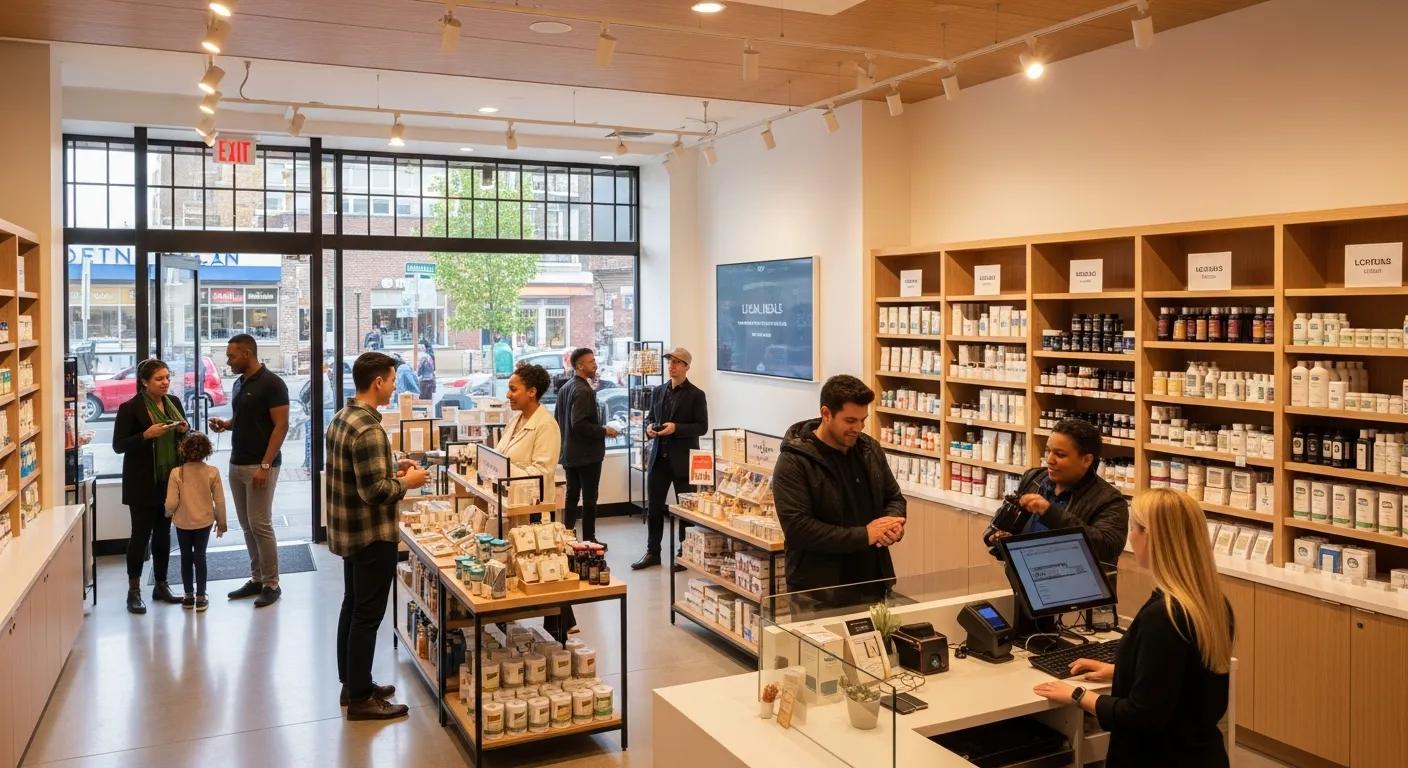
Optimize Local Visibility for Franchise Growth with LaunchedMastering Local SEO for Franchise Growth: Practical Strategies to Increase Multi-Location Visibility and Drive Sales
Local SEO for franchises is about making each location easy to find — by search engines and nearby customers. When every unit is optimized for local intent, franchises see more foot traffic, phone calls, and conversions. This guide walks franchise teams through the local search playbook: Google Business Profile (GBP) management, unique location pages, citation and review programs, technical schema, and measurement. We focus on practical, repeatable processes and templates you can scale across dozens or hundreds of units without losing local relevance. Inside, you’ll find GBP checklists, location page templates, citation and review playbooks, schema patterns, and KPI tables to track results. Use these steps to turn local discovery into real visits and measurable revenue.
What is Local SEO and Why is it Crucial for Franchise Businesses?
Local SEO helps search engines and customers match each franchise location to nearby intent — improving map-pack visibility and driving store-level actions. Key ranking signals include accurate Google Business Profiles, proximity, relevance, prominence, plus on-page local content, citations, and reviews. For franchises, local SEO ensures each unit competes in its own micro-market instead of being buried under national site signals. Consistent local signals across locations support both paid and organic efforts, funneling high-intent searchers to the nearest open store. Below, we contrast local and national SEO to show where franchise teams should invest their time.
Local intent focuses on getting a specific location in front of nearby searchers, while national SEO builds brand authority and broad organic visibility. Local SEO prioritizes the map pack and GBP performance; national campaigns target domain authority and category keywords. For multi-location brands, location-level signals — accurate NAP, dedicated location pages, and review volume — move the needle on foot traffic and conversions. National SEO still matters for brand trust and top-funnel queries, but franchisors who understand this split can allocate resources wherethey’lll get the quickest local impact. The following section outlines the primary business benefits of investing in local search.
Investing in local search delivers tangible, measurable benefits for franchises: more calls, directions requests, and in-store visits from users who are ready to act. GBP best practices and localized content typically drive higher conversion rates than general organic listings. When you combine clean citations and active review management, those conversion gains scale across a network. The short list below highlights the top benefits you can use to brief stakeholders quickly.
Local SEO delivers three clear advantages for franchise growth:
- Higher-intent traffic: Map-pack visibility captures people ready to visit or call a nearby location.
- Stronger conversions: GBP actions (directions, calls, bookings) convert better than generic organic clicks.
- Improved local reputation: Consistent reviews and citations build trust and help rankings in local search.
Work at the location level produces measurable customer actions and revenue lift, which brings us to the next operational area: optimizing Google Business PProfiles across many locations.
How to Optimize Your Google Business Profile for Multi-Location Franchise Success
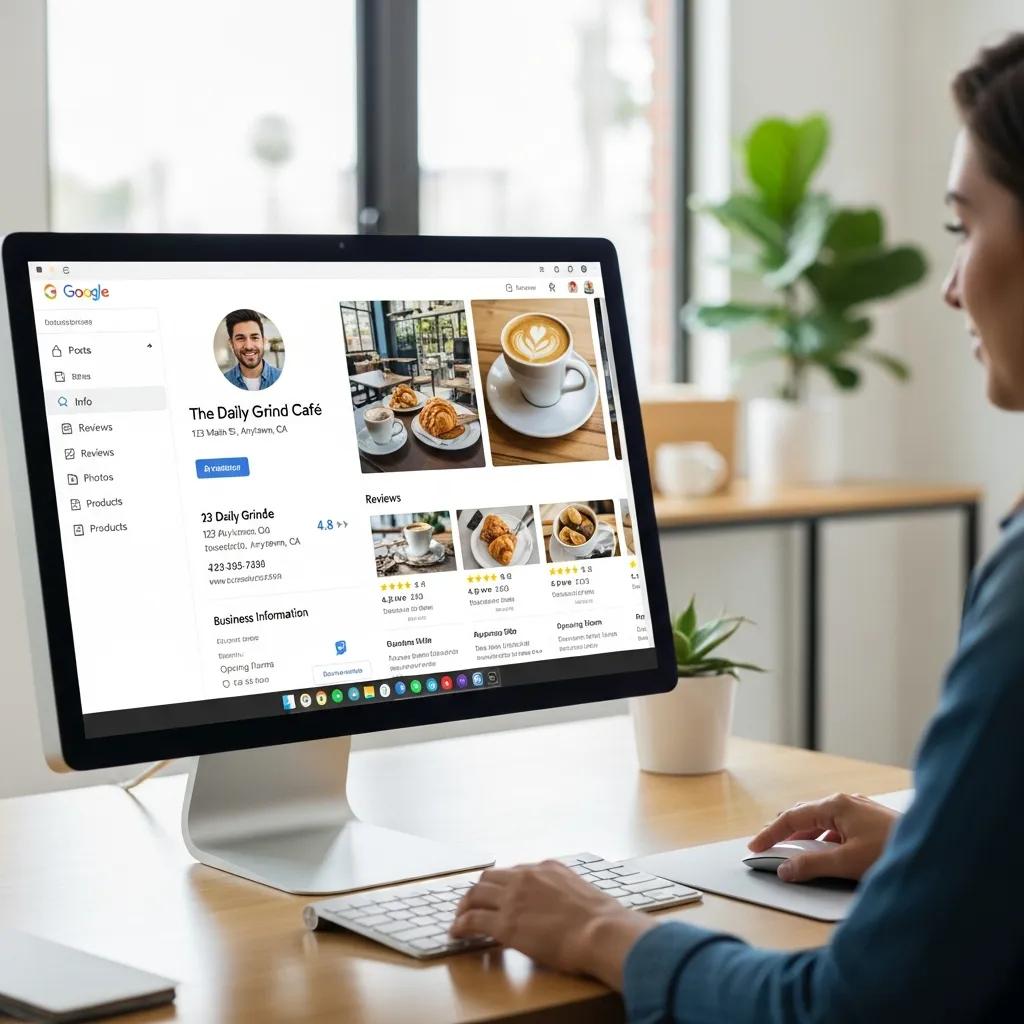
Optimizing GBP for franchises means claiming and verifying every location, standardizing categories and attributes, and keeping listings active and up to date. A complete, verified GBP with correct categories, photos, and regular posts increases your chance of showing in the local pack and drives direct actions. For multi-location management, combine central governance with delegated local managers to balance brand control and local responsiveness. A consistent GBP SOP helps franchises convert local queries into calls and visits while maintaining brand standards.
Here’s a practical, step-by-step checklist to claim and verify GBP listings at scale:
- Claim each location with clear ownership records and defined manager roles.
- Use bulk verification when eligible and centralize access via manager roles to prevent ownership confusion.
- Standardize primary/secondary categories, listed services, attributes, and a templated description that includes geo-targeted phrases.
- Upload high-quality photos (exterior, interior, staff, product) and schedule regular GBP posts to keep listings fresh.
- Put an SOP in place for Q&A and timely review responses to boost CTR and trust.
These steps create a repeatable process for securing and optimizing listings across many locations. The following subsection explains bulk verification and role assignments in more detail.
What Are the Steps to Claim and Verify Google Business Profiles for Franchise Locations?
Claiming and verifying GBP at scale requires a documented workflow, role mapping, and fast resolution of verification issues. Start by making a central brand admin the primary owner, then grant manager access to local operators for daily updates. For networks with 10+ locations, bulk verification can streamline onboarding by consolidating verification requests into a single request. Typical roadblocks include conflicting owner accounts and inconsistent NAP data — fix those before submitting verification. A verification audit checklist and clear delegation rules keep the process moving and ensure each location becomes discoverable.
Once verified, effective listing management depends on consistent content and active use of GBP features to drive engagement across franchise locations.
How to Leverage GBP Features: Categories, Photos, Posts, and Q&A for Local Engagement
Using GBP features correctly increases clicks and local conversions by signaling relevant, location-specific information. Choose a precise primary category and accurate secondary categories that reflect local services so GBP can match queries to intent. Include exterior signage, interior shots, staff photos, and service images to boost trust and direction clicks. Use GBP posts for offers, events, and local updates to keep listings fresh. Monitor Q&A and answer promptly with templated, localized responses to common questions —, reinforcingccurate information and imimprovinghe user experience.
These GBP tactics set franchises up to connect acquisition with growth. The following section explains how a lead-generation partner can help owners adopt GBP best practicesquickly.
Business Builders connects aspiring entrepreneurs with franchise and business opportunities and recommends prioritizing GBP optimization early in a launch. Their approach is pressure-free and collaborative, helping new franchisees adopt verification and growth practices that bridge acquisition and local marketing execution. Franchise owners who work with a brokered match should add GBP setup to their launch playbook. That naturally leads to building unique local content and location pages that reinforce GBP signals.
What Are Best Practices for Creating Unique Local Content and Location Pages for Franchises?

Strong location pages are local-first, unique, and trusted by users and search engines — which reduces duplicate-content risk and improves rankings. Each page should include a geo-optimized meta title, a clear H1 with city or neighborhood, a locally focused business description, a services list for that unit, local CTAs (directions, call, book), and LocalBusiness schema. Templates speed production, but every page should contain at least one local paragraph, testimonial, or detail that sets it apart. Internal links from service pages and the brand homepage help distribute authority and signal relevance.
Below is a template table with the essential location page elements and example copy you can reuse at scale while keeping each page unique.
Intro: The table compares practical location page elements with sample templated content to guide scalable, unique page creation.
Use this structure to build consistent pages while adding local copy that improves search differentiation.
Creating geo-targeted content starts with keyword research that matches user intent and GBP signals — covered in the following section.
How to Develop Geo-Targeted Keywords and Integrate Them into Franchise Websites?
Start geo keyword research with seed terms (brand + service + city), then expand into “near me” and neighborhood variations and validate them with local tools. Tools like BrightLocal and Semrush help prioritize high-intent local customer phrases. Map keywords to title tags, H1s, meta descriptions, and opening paragraphs on location pages. Use geo-phrases naturally in service descriptions and FAQs, and reinforce location context with structured data. Keep keyword mapping in a content matrix so each location targets distinct keyword combinations and avoids cannibalization.
Putting geo-keywords into page templates keeps the site consistent while allowing local uniqueness. The following subsection explains why NAP consistency is essential for citation trust and rankings.
Why Is NAP Consistency Essential Across All Franchise Locations?
NAP (Name, Address, Phone) consistency is a foundational local signal. Discrepancies confuse search engines and users and can fragment citation authority, hurting local rankings. Audit NAP across major aggregators and directories regularly to prevent mismatches. Use a centralized source of truth in your franchise CMS and propagate changes through a citation management tool. When issues appear, fix high-impact directories first, then clean up smaller sources to restore citation hygiene. Consistent NAPs support accurate GBP listings and ensure customers find the correct location information.
Consistent NAP also enables reliable schema markup and citation building, which we cover next in the authority-building section.
How Can Franchise Businesses Build Authority Through Local Citations, Reviews, and Link Building?
Authority for franchise locations comes from curated citations, a repeatable review-generation system, and targeted local link outreach. Trusted local directories and data aggregators create baseline visibility, while authentic reviews signal quality to users and algorithms. Local backlinks from chambers of commerce, community news, suppliers, and sponsorships pass topical authority to location pages. These off-site tactics lift local pack rankings and multiply the impact of onsite work.
Below is a quick reference table comparing citation sources and backlink opportunities with steps to acquire them.
The following subsections walk through practical strategies for earning reviews and local backlinks at scale while protecting brand reputation.
What Strategies Generate and Manage Authentic Customer Reviews for Franchise Reputation?
Build a predictable review program that balances timing, channels, and simple templates. Request reviews after a positive in-store experience via SMS or email and give clear, low-friction instructions. Use personalized templates that thank the customer, mention the location, and link to their preferred review platform. Centralize replies with a review management tool to ensure timely, consistent responses. For negative feedback, follow an escalation SOP: investigate, remediate, and post a public reply that shows you’re taking action. Regular reporting on review velocity and sentiment helps teams focus on reputation work.
Review generation pairs naturally with backlink outreach, which leverages local partnerships and resource pages covered next.
How to Acquire High-Quality Local Backlinks and Citations for Franchise Networks?
Target local partnerships, sponsorships, and community resources for links that matter. Map relevant institutions — schools, charities, suppliers — and propose partnerships that include a web mention. Offer valuable content or tools for local resource pages and pitch additions to existing lists. For technical outreach, try broken-link reclamation on local directories and suggest your updated location pages as replacements. Use outreach templates that explain local relevance and include the exact URL and suggested anchor text to make it easy for publishers to say yes.
These link and citation efforts strengthen local signals and support the technical schema and site structure work covered next.
What Technical SEO Essentials Support Scalable Local SEO for Multi-Location Franchises?
Technical SEO ensures location pages are discoverable, fast, and properly marked up so search engines can feature them. Add LocalBusiness JSON-LD to each location page, including name, address, geo, telephone, openingHours, and aggregateRating, so search engines can index and display accurate local details. Use a logical URL pattern and canonicalization to prevent duplicate content issues, and rely on internal links to spread relevance. Mobile optimization and fast page speed are essential — many local queries come from people on the go.
The following H3s provide concrete schema patterns and performance tactics you can implement at scale.
How to Implement Structured Data and Schema Markup for Franchise Locations?
Add LocalBusiness JSON-LD to each location ping, including name, address, telephone, geo coordinates, openingHours, and aggregateRating, to clearly communicate details to search engines. Keep schema values in a single source of truth to avoid conflicts with GBP and ensure they align with the page content displayed to users. Generate schema programmatically from your CMS for multi-location sites and validate with structured-data testing tools to catch errors. Include organization-level schema on brand pages and a location-level LocalBusiness markup for each unit to define the brand/location relationship.
Schema at scale speeds indexing and can surface richer SERP features. The following subsection explains why mobile performance matters equally.
Why Are Mobile Optimization and Site Speed Critical for Local Search Rankings?
With mobile-first indexing and Core Web Vitals, location pages must load fast and feel responsive to rank well and convert local searchers. Slow pages increase bounce rates among users seeking quick information, such as directions or hours, thereby reducing conversions. Optimize images, use critical CSS, lazy-load nonessential assets, and leverage caching and a CDN to reduce time-to-first-byte and improve interactivity. Track Core Web Vitals across a representative set of location pages to find outliers and prioritize engineering fixes.
Faster mobile pages improve both search visibility and user experience. Next, we cover how to measure and monitor local SEO performance.
How to Measure and Monitor Local SEO Performance for Franchise Growth?
Measure local SEO with location-level KPIs and tools that track GBP performance, local pack rankings, traffic to location pages, and citation health. Important metrics include local pack position, GBP search and maps views, direction requests, phone calls, organic sessions to location pages, and review sentiment/velocity. Use tools such as BrightLocal, Semrush Local Rank Trackers, Google Search Console, and GBP Insights for monthly reporting. Set an audit cadence — weekly GBP checks, monthly citation scans, and quarterly technical audits — to keep data clean and respond quickly to changes in visibility.
Below is a KPI table mapping priorities to definitions, tools, and benchmarks you can use to standardize reporting across a franchise network.
Which KPIs and Tools Track Local Pack Rankings and Google Business Profile Insights?
Track a balanced set of ranking and engagement KPIs that map to business outcomes — visibility, acquisition, conversion — and use the right tools to collect them. Use local rank trackers for map-pack positions, GBP Insights for listing actions, and Google Search Console for organic queries and site traffic. Combine these sources into a monthly dashboard, so franchise leaders can see where to focus resources for the most significant local lift.
Monitoring should feed into a regular audit cadence and remediation workflow, outlined in the following subsection.
How to Conduct Regular Audits for NAP Consistency, Reviews, and Citation Quality?
Set a repeatable audit process to identify and fix issues affecting local authorities and trusts. Run weekly GBP checks for recent changes or suspensions, monthly citation scans to spot NAP mismatches, and quarterly deep audits that include schema validation, page-speed testing, and backlink reviews. Score issues by business impact — critical (GBP suspension), high (central directory NAP mismatch), medium (missing schema), low (minor citation differences) — and assign remediation tasks with SLAs. Regular audits and prioritized fixes reduce ranking volatility and keep each location on a steady growth path.
If you’re exploring franchise ownership and need support with launch or growth, Business Builders can help connect you to vetted franchise opportunities. They offer pressure-free guidance, verify financial and background requirements, and provide personalized support to help you achieve your goals. Business Builders also share tools and community support to help new owners plan local SEO efforts that drive in-market growth.
Frequently Asked Questions
1. How does local SEO differ from national SEO for franchises?
Local SEO optimizes each location to attract customers in a specific geographic area, focusing on GBP, citations, and reviews. National SEO builds broader brand authority and targets high-level category keywords. For franchises, local SEO is essential so every unit can compete in its micro-market, while national SEO supports brand recognition and top-of-funnel discovery.
2. What role do customer reviews play in local SEO for franchises?
Reviews are a key local signal: they build customer trust and influence search visibility. Positive, frequent reviews improve local rankings and conversion rates. Franchises should proactively request reviews after good experiences and respond promptly to all feedback to show responsiveness and care.
3. How can franchises ensure NAP consistency across multiple locations?
Use a centralized system for location data and run regular audits across directories and aggregators. Citation management tools can automate updates and help maintain consistent listings. Consistent NAP data protects local search visibility and ensures customers find accurate location information.
4. What are the best practices for creating location-specific content?
Create unique pages for each location targeting geo-specific keywords, including a local business description, tailored CTAs, and at least one local-specific detail or testimonial. Use the LocalBusiness schema to help search engines understand each page. This approach improves local rankings and gives customers useful, place-specific information.
5. How can franchises measure the effectiveness of their local SEO efforts?
Track KPIs like local pack rankings, GBP actions (calls, directions), and organic traffic to location pages. Tools such as Google Search Console, BrightLocal, and GBP Insights provide the data you need. Regular audits and monthly reporting keep teams focused on the metrics that correlate with store visits and revenue.
6. What are some common pitfalls to avoid in local SEO for franchises?
Avoid inconsistent NAP data, unclaimed or poorly optimized GBPs, and duplicate content across location pages. Don’t neglect review management or mobile optimization — many local searches happen on phones. Regular audits and a clear SOP for local content and listings prevent these common issues.
7. How can franchises effectively manage their Google Business Profiles?
Keep GBP listings up to date, respond to questions and reviews, and post regularly. Make sure each profile uses accurate categories, high-quality images, and location-specific details. An SOP for GBP management and regular monitoring of GBP insights will help maintain consistency and improve local visibility.
Conclusion
Local SEO is a high-impact growth lever for franchises. By optimizing Google Business Profiles, creating unique location pages, and keeping NAP consistent, franchise networks can improve visibility, increase conversions, and drive more in-store visits. The templates, checklists, and KPI framework in this guide give franchise owners and operators a clear, scalable path to local search success. Start applying these tactics today to turn local searches into real customers.

Erik Remmel is a co-founder of Launched, a platform that helps businesses grow through AI-powered marketing, automation, and lead generation. He focuses on building scalable systems that convert cold leads into customers while streamlining operations with smart, AI-driven workflows.