
SEO vs. GEO: A 2026 Strategy Guide by Launched
By Ernie Bilodeau, ErnieBilodeau.com
In 2026, the digital landscape moves fast, and for small- to mid-sized businesses, understanding how search and AI-driven answers work is essential. SEO (Search Engine Optimization) helps your website appear in traditional search results, while GEO (Generative Engine Optimization) shapes content so AI systems can surface it as direct answers. Knowing both lets you reach more customers, stand out locally, and get better returns on your marketing spend. This article explains SEO vs. GEO, examines AI’s impact, and gives practical steps to grow your business online.
SEO vs. GEO: A 2026 Strategy Guide by Launched
- SEO improves search rankings using targeted keywords, mobile-first design, and engagement signals to keep visitors on your site.
- GEO focuses on creating structured, high-quality content that generative AI systems can trust and reuse as direct answers.
- Local SEO is essential for SMBs that want visibility and a competitive edge in nearby markets.
- AI and machine learning personalize results and refine both SEO and GEO by better understanding user intent.
- Using SEO and GEO together delivers the strongest outcomes — balancing classic search visibility with AI-driven exposure.
- Recent algorithm changes (MUM, BERT) help search better interpret user intent and context.
- Small businesses should revisit their SEO and GEO plans every 3–6 months to ensure they remain effective.
- Monitor local traffic, customer actions, and business-profile metrics to measure real impact.
- Optimize for mobile — most local searches happen on phones, so performance matters.
Why Local SEO is Critical for Small-to-Midsized Businesses in 2026

Local SEO makes your business easy to find when people search for nearby services. For small and midsized businesses, it drives nearby foot traffic, relevant website visits, and long-term customer relationships. Even against bigger competitors with larger budgets, a focused local SEO strategy levels the playing field — getting you seen by people who are ready to buy.
Geospatial Impact on Local SEO & Digital Marketing This summary blends digital marketing, technology, and urban studies to show how geography shapes local SEO, paid ads, and conversions. It explains how location signals influence search, how ads target audiences by place, and how accessibility and travel time affect consumer intent. The review highlights opportunities left unaddressed when marketers ignore real-world geography and suggests place-based content and privacy-aware practices to improve results. Topography-Aware Geospatial Digital Marketing: A Systematic Literature Synthesis of Local SEO, Spatial Targeting, and Accessibility-Driven Consumer Intent, 2025
Geospatial Impact on Local SEO & Digital Marketing
This summary blends digital marketing, technology, and urban studies to show how geography shapes local SEO, paid ads, and conversions. It explains how location signals influence search, how ads target audiences by place, and how accessibility and travel time affect consumer intent. The review highlights opportunities left unaddressed when marketers ignore real-world geography and suggests place-based content and privacy-aware practices to improve results.
Topography-Aware Geospatial Digital Marketing: A Systematic Literature Synthesis of Local SEO, Spatial Targeting, and Accessibility-Driven Consumer Intent, 2025
What Is SEO, and How Will Advanced SEO Trends Evolve by 2026?
SEO — Search Engine Optimization — is the practice of making your site discoverable in search engines. That means using relevant keywords, ensuring mobile usability, and keeping visitors engaged. By 2026, SEO will incorporate smarter tools and signals that reveal user intent more clearly, helping businesses tailor content and experiences to what customers actually want.
How Does SEO Improve Organic Search Visibility?
SEO increases visibility by matching the language users type into search engines and by delivering a fast, mobile-friendly experience. Engagement metrics — time on site, low bounce rates, and repeat visits — tell search engines your pages satisfy users, which supports better rankings.
What Are the Key Advanced SEO Techniques to Adopt in 2026?
In 2026, AI-driven SEO tools will help you uncover real user questions and craft content that feels natural and conversational. Use these tools to map intent, structure answers clearly, and personalize where appropriate. The result: content that earns attention in search and converts visitors into customers.
What Is Generative Engine Optimization and How Does It Differ from SEO?
Generative Engine Optimization (GEO) is focused on making content usable by AI systems that generate direct answers. Instead of optimizing solely for link-based rankings, GEO emphasizes clear structure, semantic relevance, authoritativeness, and freshness so that large models can source and cite your content. While SEO targets traditional listings, GEO aims to be the content that those systems surface when they answer user queries.
Generative Engine Optimization: AI Content & Search Engine Shifts Large language models are changing search by providing AI-generated summaries alongside — or instead of — link-based results. Major platforms are pulling content from multiple sources to form concise answers. That shift raises the bar for quality, trust, and structured data: GEO prioritizes semantic relevance and signals that help models verify and reuse your content. While trust and market control remain open questions, GEO is now a core part of online visibility strategy. Generative Engine Optimization: How Search Engines Integrate AI-Generated Content into Conventional Queries, F Rejón-Guardia, 2025
Generative Engine Optimization: AI Content & Search Engine Shifts
Large language models are changing search by providing AI-generated summaries alongside — or instead of — link-based results. Major platforms are pulling content from multiple sources to form concise answers. That shift raises the bar for quality, trust, and structured data: GEO prioritizes semantic relevance and signals that help models verify and reuse your content. While trust and market control remain open questions, GEO is now a core part of online visibility strategy.
Generative Engine Optimization: How Search Engines Integrate AI-Generated Content into Conventional Queries, F Rejón-Guardia, 2025
How Are AI Search Optimization Strategies Transforming Local SEO and GEO?
AI makes both local SEO and GEO more precise. It understands conversational queries, spots local trends, and delivers personalized results to neighborhoods and communities. For small businesses, integrating AI into content and local campaigns improves discoverability and relevance, helping you reach the right customers at the right time.
What Role Do Machine Learning and Semantic Search Play in AI Optimization?
Machine learning helps search systems learn from user behavior, while semantic search focuses on meaning rather than exact keywords. Together, they let search engines match queries to the best answers. Businesses should write in natural language, answer specific customer problems, and structure content so both humans and machines can understand it.
How Can Small Businesses Integrate AI to Enhance Local Search Performance?
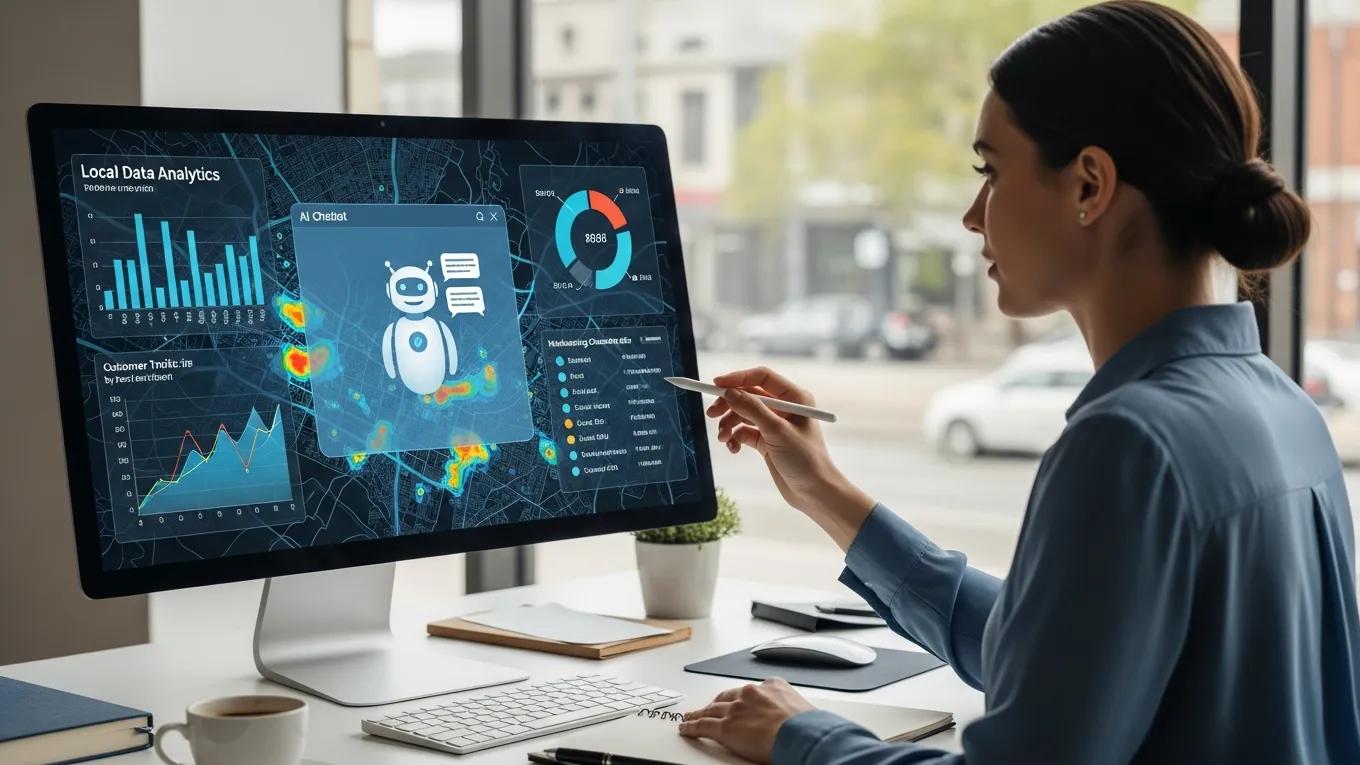
Small businesses can boost local search performance by:
- Leveraging Natural Language Tools: Use NLP to create content that sounds like real conversations and answers the questions people ask verbally.
- Monitoring Performance in Real Time: AI dashboards let you spot trends and adjust campaigns quickly.
- Publishing Local, Relevant Content: Create pages and posts that address neighborhood needs, events, and local intent.
These steps make your business easier to find and more relevant to local customers searching right now.
The Power of Local SEO for Business Growth Compared to GEO Targeting
Local SEO tends to drive higher-value traffic from nearby people ready to buy. It builds local recognition and loyalty and is often more cost-effective than broad geographic campaigns. GEO can amplify reach through AI-driven answers, but local SEO remains the most direct path to nearby customers who convert.
How Does Local SEO Differ from GEO in Targeting Local Audiences?
Local SEO targets people in a defined area using local keywords, business listings, and map optimization. GEO takes a broader view, optimizing content so AI systems recommend it across different contexts and locations. For most small businesses, local SEO delivers more immediate foot traffic and meaningful leads.
What Are the Benefits of Focusing on Local SEO for Small Businesses?
Focusing on local SEO gives you:
- Stronger Local Visibility: Appear in maps and local search results where buyers are looking.
- Better Community Engagement: Connect directly with neighbors and local audiences.
- Lower Customer Acquisition Costs: Targeted local efforts usually deliver a better ROI than broad campaigns.
Investing in local SEO helps your business grow where your customers actually are.
How Can Small Businesses Leverage SEO and GEO Integration for Maximum ROI?
Bring SEO and GEO together to maximize returns:
- Unify your data and tech: Use AI and analytics to combine insights from search and generative channels.
- Partner locally: Collaborate with nearby businesses and organizations to build relevance and backlinks.
- Measure and iterate: Review what’s working and regularly refine messaging and targeting.
This joined approach helps you convert more visitors and spend marketing dollars more efficiently.
What Are the Latest Algorithm Updates and Their Effects on Local SEO and GEO in 2026?
Search engines continuously refine ranking and answer-generation systems to give users clearer, more useful results. These updates affect how both local SEO and GEO perform — so staying current with changes helps you keep or improve your visibility.
How Do Google’s MUM and BERT Updates Influence Local SEO and GEO Practices?
MUM and BERT improve search understanding: BERT deciphers context, and MUM handles complex, multi-modal queries. For businesses, that means writing clear, context-rich content that answers specific customer questions and includes useful local details.
What Should Small Businesses Know About Multisearch and Semantic Search Evolution?
Multisearch — searching with text plus images — and semantic search — focusing on meaning — are both growing in local discovery. Create diverse content (text, photos, FAQs) that addresses real user questions so you show up across more search formats.
How to Measure and Monitor Local SEO and GEO Performance Effectively?
Tracking performance is essential. The table below lists key metrics, what they reveal, and reasonable targets for small businesses.
Which KPIs and Tools Best Track Local SEO Success?
Track local visits, conversion actions, and Google Business Profile insights. Use tools like Google Analytics, Search Console, SEMrush, and Ahrefs to build a clear view of performance and identify optimization opportunities.
How Often Should Businesses Audit and Update Their Local SEO and GEO Strategies?
Audit your strategies every 3–6 months. Regular reviews let you respond to algorithm shifts, seasonal changes, and evolving customer behavior before small problems become big ones.
Local SEO and GEO Differences and Business Implications?
Knowing how local SEO and GEO differ helps you pick the right tactics for growth. Below are concise answers to common questions.
What Is the Difference Between Local SEO and GEO?
Local SEO targets customers in a specific area using local signals, listings, and map optimization. GEO optimizes content so AI-driven systems can use it as answers across broader contexts. For most SMBs, local SEO delivers immediate local visibility; GEO complements it by expanding reach through generative channels.
How Does Generative Engine Optimization Work?
GEO combines structured content, semantic relevance, and trust signals to help generative AI surface your content as answers. It uses data and high-quality publishing practices to increase the likelihood that AI systems will reference your content when responding to user queries.
Frequently Asked Questions
How can small businesses effectively measure local SEO performance?
Measure local SEO by tracking local website visits, calls, or bookings driven by search, and Google Business Profile interactions. Combine these metrics in tools like Google Analytics and SEMrush to understand what’s working and where to improve.
What role does user experience play in local SEO and GEO?
User experience is critical. Fast load times, clear navigation, and mobile-first design keep people on your site and signal value to search systems. A smooth experience improves rankings and conversion rates.
How often should businesses update their content for local SEO?
Refresh local content every 3–6 months. Regular updates keep information accurate, demonstrate activity to search engines, and help you stay relevant to local needs.
What are the benefits of integrating SEO and GEO strategies?
Integrating SEO and GEO expands how people find your business: traditional search listings and AI-generated answers. Together, they increase visibility, diversify traffic sources, and improve overall marketing efficiency.
What emerging technologies are influencing local SEO today?
AI, machine learning, and advanced natural language tools are shaping local SEO. They reveal user intent, enable smarter content recommendations, and provide near-real-time insights for faster optimization.
How can businesses ensure they comply with privacy regulations in their local SEO efforts?
Be transparent about data collection, secure consent where required, and comply with regulations such as GDPR and CCPA. Use anonymized data and clear privacy notices to build trust while optimizing local campaigns.
What is the significance of mobile optimization in local SEO?
Mobile optimization is essential because most local searches occur on mobile devices. Fast, responsive sites with easy navigation and clear contact options improve user experience and local search rankings.
Conclusion
Understanding both SEO and GEO is vital for small- to mid-sized businesses that want to grow online in 2026. Prioritize local SEO to reach nearby customers, and use geo-focused practices to appear in AI-driven search results. Together, they create a resilient, future-ready marketing approach — start testing these tactics now and iterate every few months to keep improving.