

How businesses reclaimed hours using AI-driven workflow automation
Artificial intelligence is reshaping how teams work by returning hours previously lost to repetitive tasks. AI-driven workflow automation converts slow, manual processes into fast, repeatable flows so people can focus on higher-value work. This piece maps the key automation techniques, shows how teams quantify reclaimed time, and highlights real-world examples with measurable outcomes. With the right tools and approach, organizations can unlock meaningful operational gains.
As companies modernize, AI’s role becomes clear: cut repetitive work, remove friction, and free employees to concentrate on strategic priorities. Below, we outline practical metrics for tracking time savings and share recent case studies across industries that show clear productivity improvements.
Understanding AI-powered workflow automation for small and mid-size business owners
For many small and mid-size business owners, “workflow automation” can sound technical or overwhelming. Put simply, workflow automation uses software to run repetitive tasks automatically so your team doesn’t have to do them by hand. Add AI, and those workflows get smarter: they can interpret context, learn from data, and make routine decisions.
Imagine you run customer support, and inquiries arrive around the clock. AI-powered automation can keep a process running 24/7—answering common questions instantly, routing complex issues to the right person, and updating records automatically. That continuous coverage improves response times and lets your team spend their time fixing harder problems.
Here’s a practical starter checklist:
- Identify common customer interactions: List frequent questions or tasks like order status, appointment bookings, or product details.
- Choose AI-powered tools: Pick platforms with chatbots and workflow automation that integrate with your systems.
- Design workflow steps: Map how inquiries move from AI responses to human agents for escalations.
- Set up 24×7 automation: Configure chatbots and automated replies to provide round-the-clock coverage.
- Monitor and improve: Track performance and customer feedback to refine the flow over time.
With these steps, small and mid-sized businesses can ensure customers receive timely answers while teams focus on higher-impact work.
Key takeaways
- AI-driven workflow automation reduces repetitive tasks and improves productivity and operations.
- Core technologies include machine learning, natural language processing, and robotic process automation.
- Teams measure time savings using metrics such as cycle time reduction, task completion rates, and employee output.
- ROI is evident in cost-benefit comparisons, time-savings calculations, and shifts in employee engagement.
- Case studies report processing-time drops of up to 40% and broad productivity gains across sectors.
- Top platforms emphasize intuitive interfaces, seamless integrations, and real-time analytics to optimize workflows.
- Pairing RPA with intelligent automation scales processes while reducing errors.
- Emerging trends such as hyperautomation will accelerate the reclaiming of time by automating more complex processes.
- Ethical safeguards and measurable outcomes help ensure that AI adoption supports teams and complies with regulations.
What core AI workflow automation techniques are transforming processes?
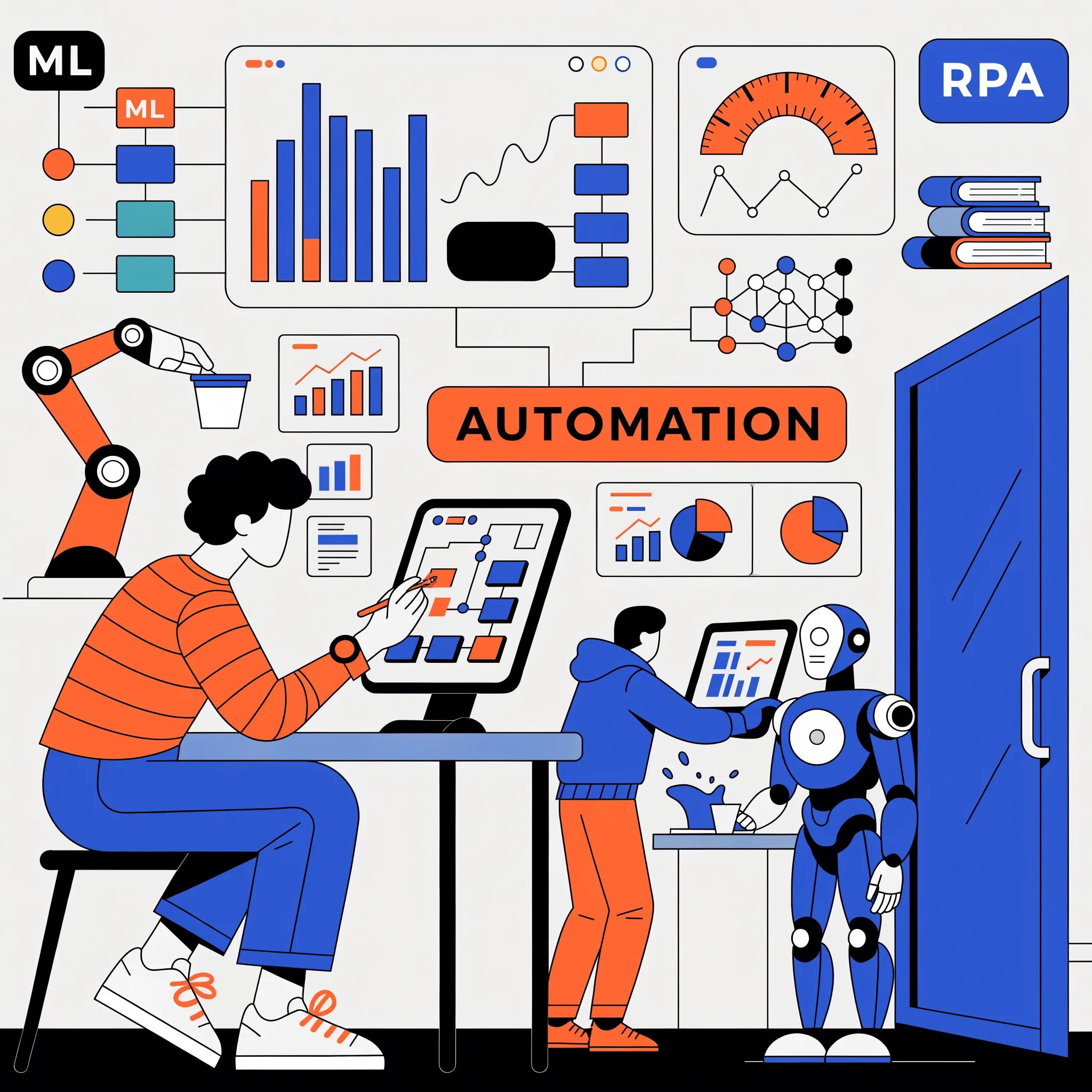
AI workflow automation brings together technologies to streamline routine work, improve accuracy, and enable organizations to scale. By automating predictable tasks, these tools speed delivery and cut human error, enabling teams to handle higher volumes without a matching increase in headcount.
Which AI technologies enable effective workflow automation?
A few core technologies power effective automation: machine learning uncovers patterns and predicts outcomes; natural language processing automates text and voice interactions; and robotic process automation (RPA) handles structured, repeatable tasks. Combined, they enable faster decisions, cleaner data handling, and lower operating costs.
How does workflow automation remove repetitive tasks in enterprises?
Automation shifts repetitive work to software bots and AI decision systems. RPA handles data entry, invoice processing, and report generation, while AI models classify items and flag exceptions. That frees people to focus on creative and strategic priorities, which boosts productivity and job satisfaction.
How is time saved and quantified through AI-driven process optimization?
Measuring time savings from AI relies on practical KPIs that connect automation to business outcomes. Common indicators include shorter turnaround times, higher throughput, and faster customer responses. Tracking these metrics gives teams the evidence they need to quantify efficiency gains and prioritize future automation.
What metrics measure AI-induced time savings?
Common metrics for tracking time savings include:
- Cycle time reduction: The elapsed time to complete a process before versus after automation.
- Task completion rates: The share of tasks finished within defined time windows after automation.
- Employee productivity: Output or throughput comparisons before and after AI tool deployment.
Together, these measures provide concrete proof of the efficiency improvements automation delivers.
Which methodologies demonstrate ROI from automated task reduction?
Organizations typically demonstrate ROI from automation using several methods:
- Cost-benefit analysis: Compare implementation and maintenance costs against savings and efficiency gains.
- Time-savings analysis: Convert reclaimed hours into labor cost savings and added capacity.
- Employee engagement surveys: Measure how automation affects morale and productivity to capture indirect value.
These approaches build a clear, data-backed case for automation investments.
Which industry case studies show AI-driven efficiency gains?
Across sectors, companies are using AI to streamline operations and reclaim time once spent on manual work. Results usually include faster cycles, fewer errors, and a shift of human effort toward higher-impact activities.
How have enterprises across sectors reclaimed time with AI automation?
Finance, healthcare, and manufacturing illustrate the range of gains. For example, a financial firm cut compliance reporting time by 40% through automated document processing. Healthcare organizations sped up patient intake and records handling with AI, improving throughput and care coordination. These examples show measurable time savings in different contexts.
What recent cases highlight quantifiable productivity increases?
Recent examples show meaningful improvements: a major retail chain adopted AI-driven inventory systems and saw a 30% increase in stock turnover, lifting sales and customer satisfaction; an automotive manufacturer optimized assembly workflows with AI and reduced assembly time by 25%. These results demonstrate the tangible impact of focused automation projects.
How organizations measure efficiency gains over time
Which tools and technologies lead AI workflow automation adoption?

Leading automation platforms combine usability, connectivity, and analytics to enable teams to quickly deploy, monitor, and iterate on automated processes. These tools lower friction and make it easier to scale automation across the organization.
What features define top AI-driven optimization tools?
Best-in-class tools typically offer:
- User-friendly interfaces: Intuitive design that reduces the adoption curve across teams.
- Integration capabilities: Connectors and APIs that link automation to existing systems and data sources.
- Real-time analytics: Dashboards and alerts that surface process performance and exceptions as they happen.
These features help organizations capture the full value of automation.
How do RPA and intelligent automation work together?
RPA and intelligent automation are complementary: RPA handles repeatable, rule-based tasks, while intelligent automation adds AI-driven decisioning. Together they enable end-to-end automation that scales, cuts errors, and adapts to changing inputs for faster, more reliable operations.
What future trends will shape AI-driven efficiency and time savings?
The automation landscape is evolving—several trends point to faster, broader time savings as AI matures and embeds deeper into business workflows.
How will hyperautomation advance time reclamation?
Hyperautomation—combining process mining, RPA, and AI—lets companies automate increasingly complex workflows. By linking multiple automation layers, organizations can eliminate manual handoffs and reclaim significant time across cross-functional processes.
What ethical considerations and measurable outcomes matter in AI deployment?
Responsible AI deployment requires attention to ethics, data privacy, and workforce impacts. Organizations should set clear, measurable outcomes—accuracy, time saved, compliance—and pair them with change management and reskilling plans to protect employees and ensure regulatory compliance.
Frequently asked questions
What challenges do businesses face when implementing AI-driven workflow automation?
Common hurdles include employee resistance, inconsistent or poor-quality data, and upfront costs for tools and training. Choosing the right tools and investing in change management and ongoing training are critical to overcoming these obstacles and realizing the benefits of automation.
Can AI workflow automation improve customer service?
Yes. AI speeds response times and routes routine inquiries to chatbots or automated workflows, freeing human agents to handle complex issues. It also surfaces insights from customer interactions to personalize service and improve satisfaction.
How does regulatory compliance factor into AI-driven workflow automation?
Compliance is essential: automated processes must follow data protection rules and industry regulations. Automation can improve compliance by standardizing documentation and audit trails, but it requires regular reviews and monitoring to stay aligned with evolving rules.
What skills do employees need to work effectively with AI technologies?
Employees benefit from a mix of technical and human skills—basic data literacy, familiarity with automation tools, problem-solving, and strong communication. Targeted training and upskilling help teams work confidently alongside AI systems.
How can smaller businesses leverage AI workflow automation?
Small businesses can start with affordable, cloud-based tools and prebuilt integrations to automate tasks like scheduling, invoicing, and customer replies. These scalable solutions minimize upfront costs and let small teams capture efficiency gains quickly.
What impact does AI workflow automation have on employee morale?
When implemented thoughtfully, automation can reduce tedious work and improve job satisfaction by shifting people to higher-impact tasks. Clear communication, reskilling, and involving employees in automation planning are key to maintaining morale and trust.
Are there downsides to relying heavily on AI automation?
Yes. Over-automation can reduce flexibility, limit human oversight, and increase risk if systems aren’t well monitored. It can also disrupt roles if change isn’t managed carefully. Balancing automation with human checks and reskilling is essential.
Conclusion
AI-powered workflow automation delivers tangible benefits: faster processes, lower costs, and more engaged teams able to focus on strategic work. Organizations that combine thoughtful implementation, the right tools, and strong change management can unlock measurable productivity gains. Explore available AI tools and approaches to see how your business can reclaim time and operate more efficiently.