

Key B2B Marketing Trends for 2026: AI Marketing Automation and Data-Driven Strategies
By Ernie Bilodeau, Launched
As we head into 2026, B2B marketing is shifting faster than ever. Advances in technology and rising buyer expectations mean companies are leaning on AI marketing automation and data-driven strategies to get smarter and move faster. Below, we break down the trends—such as enhanced data analysis, personalization through automation, predictive analytics, and real-time optimization—and explain how they help businesses engage customers and improve performance.
AI doesn’t just speed up workflows; it uncovers insights that meaningfully boost lead generation and customer engagement. Adopting these tools brings both hurdles and opportunities—this article walks through the implications and practical ways B2B teams can apply these trends.
2026 B2B Marketing Trends: Data-Driven AI Strategies by Launched
- AI marketing automation and data-first approaches are reshaping B2B marketing to improve engagement and operational efficiency.
- AI-powered data analysis enables precise targeting and finer audience segmentation for smarter campaigns.
- Automation-driven personalization delivers tailored content at scale, improving conversions and loyalty.
- Predictive analytics forecasts customer behavior, enabling teams to optimize campaigns and increase ROI.
- Real-time optimization lets marketers pivot campaigns instantly in response to live performance and market shifts.
- Ethical data practices—transparency, privacy, and compliance—are essential to maintaining trust.
- When AI marketing automation is integrated with sales, lead scoring improves and conversion paths shorten.
- Conversational AI boosts interactions by automating qualification and offering personalized, instant support.
- Account-based marketing (ABM) trends prioritize hyper-customization and tighter CRM integration for high-value accounts.
Enhanced Data Analysis
Enhanced data analysis sits at the center of modern B2B marketing. With AI-driven tools, companies can process large datasets to spot patterns and trends that inform smarter decisions. That clarity improves targeting, increases ad relevance, and drives better ROI.
Detailed segmentation—powered by richer analytics—lets marketers craft campaigns that actually resonate. As analytics capabilities evolve, teams that convert raw data into actionable insight will outpace competitors in understanding customer needs and preferences.
Personalization Through Automation
Personalization through automation is changing how B2B brands connect with buyers. AI analyzes customer signals to generate highly targeted campaigns, helping teams deliver the right message to the right person at the right time. That relevance boosts engagement and conversion.
Automation makes that personalized outreach scalable, freeing marketers to focus on strategy rather than manual execution. The result: better experiences, stronger relationships, and higher lifetime value as customers feel seen and supported.
Predictive Analytics
Predictive analytics helps companies anticipate trends and buyer behavior by learning from historical data. That forward-looking approach enables proactive marketing—reaching prospects before demand peaks and tailoring offers when they matter most.
Integrating predictive analytics into planning improves resource allocation and campaign optimization, amplifying impact across the funnel. As predictive models get more sophisticated, their role in B2B marketing will only increase.
This study digs into how AI and predictive analytics reshape digital marketing outcomes.
The Impact of Predictive Analytics and AI on Digital Marketing Strategy and ROI This research examines how artificial intelligence and predictive analytics affect digital marketing strategy and return on investment. It reviews literature on AI-driven tactics—email personalization, customization, social media optimization, and consumer segmentation—describes the research methods, and analyzes collected data. The findings highlight a clear link between effective AI use and higher engagement, conversion, and revenue. The paper notes limitations, suggests future research directions, and recommends that businesses invest in predictive analytics and AI to stay competitive in a changing digital landscape. The impact of predictive analytics and AI on digital marketing strategy and ROI, MA Al Khaldy, 2023
The Impact of Predictive Analytics and AI on Digital Marketing Strategy and ROI
This research examines how artificial intelligence and predictive analytics affect digital marketing strategy and return on investment. It reviews literature on AI-driven tactics—email personalization, customization, social media optimization, and consumer segmentation—describes the research methods, and analyzes collected data. The findings highlight a clear link between effective AI use and higher engagement, conversion, and revenue. The paper notes limitations, suggests future research directions, and recommends that businesses invest in predictive analytics and AI to stay competitive in a changing digital landscape.
The impact of predictive analytics and AI on digital marketing strategy and ROI, MA Al Khaldy, 2023
Real-Time Optimization
Real-time optimization keeps campaigns relevant in an always-on market. AI tools let marketers tweak messaging, targeting, and budgets on the fly so performance stays aligned with current conditions and customer behavior.
By continuously tracking metrics, teams find small wins and iterate quickly—turning incremental adjustments into measurable uplift. That agility makes marketing more effective and responsive to evolving buyer needs.
2026 B2B Marketing Trends: Data-Driven AI Strategies by Launched
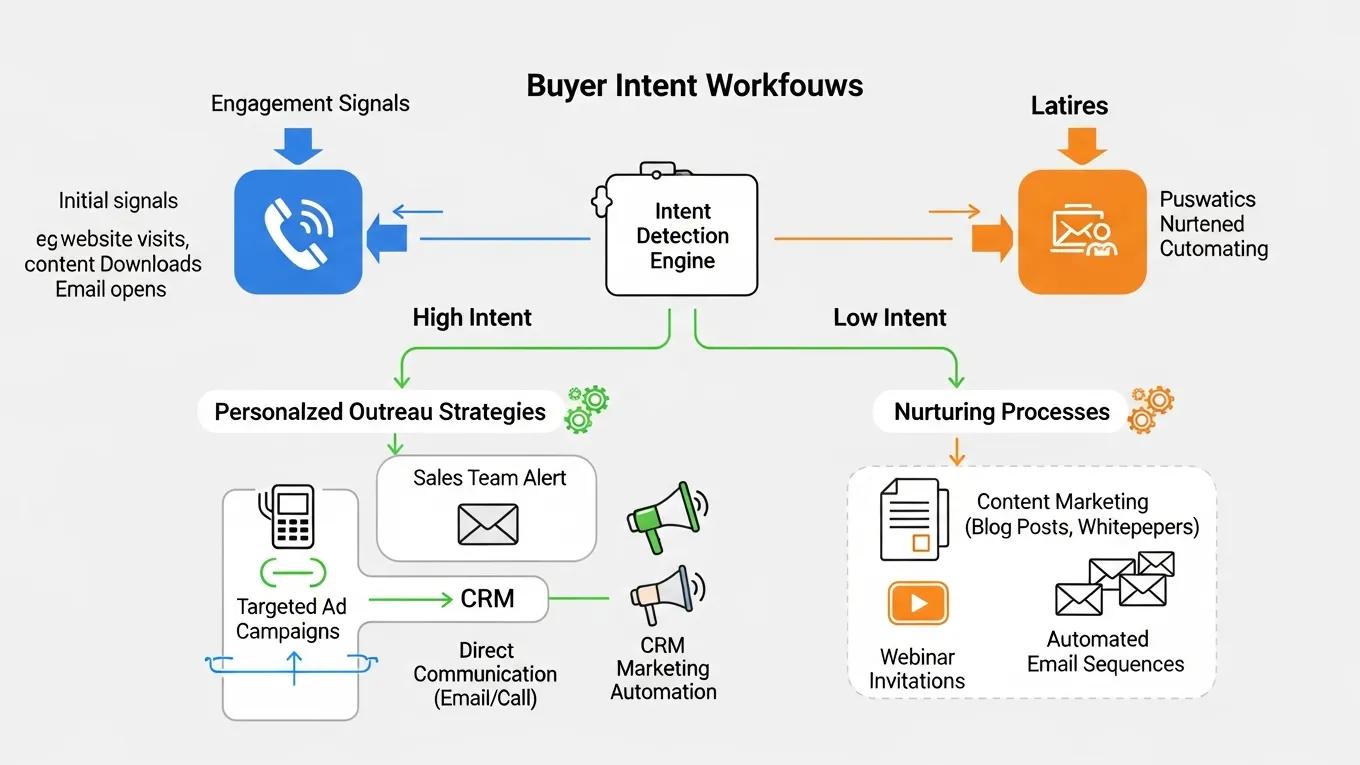
AI-powered tools are creating more meaningful customer interactions. From faster responses to recommendations tailored to user behavior, these systems raise satisfaction and drive conversions.
Conversational AI, for example, automates lead qualification so sales teams spend time on the highest-value conversations. That combination of speed and personalization strengthens relationships and improves outcomes.
Ethical Data Practices
As data-driven marketing grows, ethical practices become a competitive advantage. Businesses must be transparent about data collection, respect privacy, and meet regulatory requirements to preserve customer trust.
Committing to ethical data use not only protects people’s information but also builds brand credibility—an increasingly important differentiator for buyers who value integrity.
Integration with Sales Processes
Tying AI marketing automation to sales processes creates smoother handoffs and clearer signals for action. Automated lead scoring and segment insights help sales prioritize the right accounts and close deals faster.
AI also improves tracking of buyer interactions, enabling sales teams to personalize outreach and nurture relationships based on real client needs. That alignment drives more predictable growth.
How is AI Marketing Automation Transforming B2B Lead Generation in 2026?
AI marketing automation is changing B2B lead generation by enabling continuous, personalized engagement. With richer behavioral data, companies can refine lead scoring and respond to prospects in real time—improving conversion rates and shortening sales cycles.
As these capabilities advance, AI will play an even bigger role in identifying and nurturing the most promising leads.
What are the benefits of AI-powered marketing automation platforms?
AI-powered marketing automation platforms deliver clear business benefits:
- Enhanced Efficiency: Automate routine work so teams focus on strategy and creative execution.
- Improved Lead Engagement: Personal, timely communications increase the likelihood of conversion.
- Increased Conversion Potential: Data-driven insights help optimize campaigns for better outcomes.
Together, these benefits make AI a practical investment for improving marketing performance.
Which AI tools optimize lead qualification and sales conversion?
Several AI tools are effective for lead qualification and boosting sales conversion:
- Predictive Lead Scoring: Uses historical signals to surface high-potential prospects.
- Hyper-Customization: Delivers messages tailored to individual preferences and behaviors.
- AI Chatbots: Automate interactions to provide instant answers and route qualified leads.
These tools help teams work smarter and convert more efficiently.
What Role Does Predictive Analytics Play in Enhancing B2B Marketing Outcomes?
Predictive analytics drives better ROI by converting data into forward-looking recommendations. By analyzing customer and market trends, organizations can fine-tune messaging, timing, and channel choice to increase engagement and satisfaction.
Predictive models also help teams allocate budget and resources more effectively, maximizing campaign impact.
How does predictive analytics improve lead scoring accuracy?
Predictive analytics refines lead scoring by detecting patterns in historical behavior and outcomes. That reduces subjective bias and integrates cleanly with CRM systems, so sales teams focus on leads with the highest conversion potential.
Using these models improves qualification and drives better conversion rates across the funnel.
What recent 2026 statistics demonstrate predictive analytics impact?
- Increased Qualified Leads: Firms using predictive analytics report larger pipelines of high-quality leads.
- Reduced Customer Acquisition Costs: Targeted campaigns lower acquisition costs through more effective audience targeting.
- Improved Marketing Effectiveness: Organizations see measurable gains in campaign performance when predictive insights guide decisions.
These outcomes highlight why predictive analytics is becoming table stakes for B2B teams.
How Are Account-Based Marketing Trends Shaping B2B Strategies in 2026?
Account-based marketing (ABM) trends emphasize highly tailored experiences and focused engagement for top accounts. That precision builds stronger relationships and increases conversion with high-value clients.
By aligning ABM with broader marketing and sales workflows, businesses can deliver more relevant outreach and better results.
What are the latest account-based marketing implementation tactics?
- Hyper-Customization: Craft content and messaging specifically for target accounts.
- Automated Lead Nurturing: Use workflows to move accounts through the buying journey efficiently.
- Integration with CRM Systems: Maintain unified data and coordinate efforts between marketing and sales teams.
These tactics help teams scale ABM while preserving the personalized touch that wins deals.
How does personalization enhance account-based marketing effectiveness?
Personalization raises relevance and trust, two key drivers of ABM success. Tailored experiences make target accounts feel prioritized, improving engagement and long-term loyalty.
When personalization is done well, ABM becomes a relationship-building engine rather than just a campaign tactic.
What Is the Impact of Digital Transformation on B2B Marketing Practices?
Digital transformation is changing how B2B teams operate—moving manual processes into automated workflows, improving targeting, and enabling more relevant customer experiences.
The shift brings opportunities to operate more efficiently, but it also requires organizations to adopt new tools and rethink processes to match evolving buyer expectations.
How are enterprises integrating digital tools for marketing automation?
- Automating Repetitive Tasks: Removing manual steps to free up team capacity.
- Enhancing Targeting Precision: Using analytics to sharpen audience segments.
- Improving Campaign Performance: Applying real-time insights to optimize results.
These integrations help companies get more from their marketing investments.
What challenges and opportunities arise from digital transformation?
- Integration with Legacy Systems: Merging new tools with existing infrastructure can be complex.
- Enhanced Customer Interactions: Digital tools create more meaningful touchpoints with buyers.
- Increased ROI: Thoughtful digital strategies can deliver significant performance gains.
Tackling integration hurdles unlocks the full potential of digital transformation.
How Does Conversational AI Enhance Customer Engagement and Sales Efficiency?
Conversational AI improves engagement and efficiency by automating lead qualification and delivering personalized interactions at scale. Real-time conversations reduce friction and help move prospects toward purchase faster.
That automation gives sales teams more bandwidth to engage in high-value activities and close deals.
What are successful case studies of conversational AI in B2B sales?
Real-world examples show conversational AI’s impact across use cases:
- Lead Qualification: Automated dialogues surface more qualified leads for follow-up.
- Customer Support: Faster response times improve satisfaction and retention.
- Sales Efficiency: Chatbots and assistants streamline workflows and boost conversions.
These cases demonstrate how conversational AI can be a practical growth lever for B2B teams.
How does conversational AI reduce manual marketing tasks?
Conversational AI automates routine interactions—such as qualifying leads and answering common questions—so teams spend less time on repetitive tasks. That reduces workload on sales teams and allows focus on strategic, revenue-generating activities.
Frequently Asked Questions
What are the key challenges businesses face when implementing AI marketing automation?
Common challenges include integrating AI with legacy systems, ensuring high-quality and consistent data, and training staff to use new platforms effectively. Organizations also must manage ethical and regulatory concerns around data privacy and consent—failing to address these can undermine results.
How can businesses measure the success of their AI-driven marketing strategies?
Track KPIs like conversion rate, lead quality, engagement metrics, and return on investment (ROI). Use analytics platforms to monitor performance in real time, and combine quantitative data with customer feedback to understand how personalization and automation impact outcomes.
What role does customer feedback play in refining AI marketing strategies?
Customer feedback provides direct insight into what’s resonating and what isn’t. Feeding that feedback into models and content planning helps improve personalization, relevancy, and satisfaction—strengthening both short-term performance and long-term loyalty.
How does ethical data usage impact consumer trust in AI marketing?
Ethical data practices—clear consent, transparent usage, and solid security—build trust. When customers know their data is handled responsibly, they’re more likely to engage and share the signals that make personalized marketing effective. Trust supports retention and brand reputation.
What future trends can we expect in AI marketing automation beyond 2026?
Expect more advanced machine learning for deeper personalization, increased use of AR/VR for immersive experiences, and continued focus on hyper-personalization. Sustainability and stronger ethical standards will also shape how companies deploy AI in marketing.
How can small businesses leverage AI marketing automation effectively?
Start small with scalable tools that match your budget and needs. Automate repetitive tasks like email sequences and social posts, use AI-driven analytics to inform targeting, and pick platforms with good training and support. Partnering with specialists can accelerate results without overwhelming your team.
Conclusion
Adopting AI marketing automation and data-first strategies is no longer optional for B2B teams that want to compete in 2026. These technologies improve engagement, streamline operations, and boost marketing effectiveness. Ready to put these trends to work? Explore how our solutions can help you implement them today.